For Orlando homeowners, the kitchen countertop is one of the most frequently used surfaces in the house. The question of whether it is genuinely safe for food contact is a reasonable one, even if it rarely gets a thorough answer during the shopping process. The term “food safe” gets applied loosely in marketing materials, and understanding what it actually means helps you make a confident, well-informed decision. At Art Stone Surfaces, we help homeowners across the Orlando area choose materials based on how their kitchens actually function.
What Food Safe Means in the Context of a Countertop
For a countertop material, food safe means two things working together:
- Non-toxic composition: the material does not release harmful compounds, heavy metals, or chemicals into food through direct contact
- Non-porous or easily sanitized surface: the material does not harbor bacteria in pores, crevices, or surface irregularities that survive routine cleaning
No countertop surface, regardless of material, replaces proper food handling. Raw meat, poultry, and seafood should always be prepared on a designated cutting board rather than directly on any countertop surface. That said, some countertop materials are genuinely more hygienic than others under normal daily kitchen conditions, and those differences are worth understanding before you make a selection.
Engineered Quartz: The Most Reliably Hygienic Option
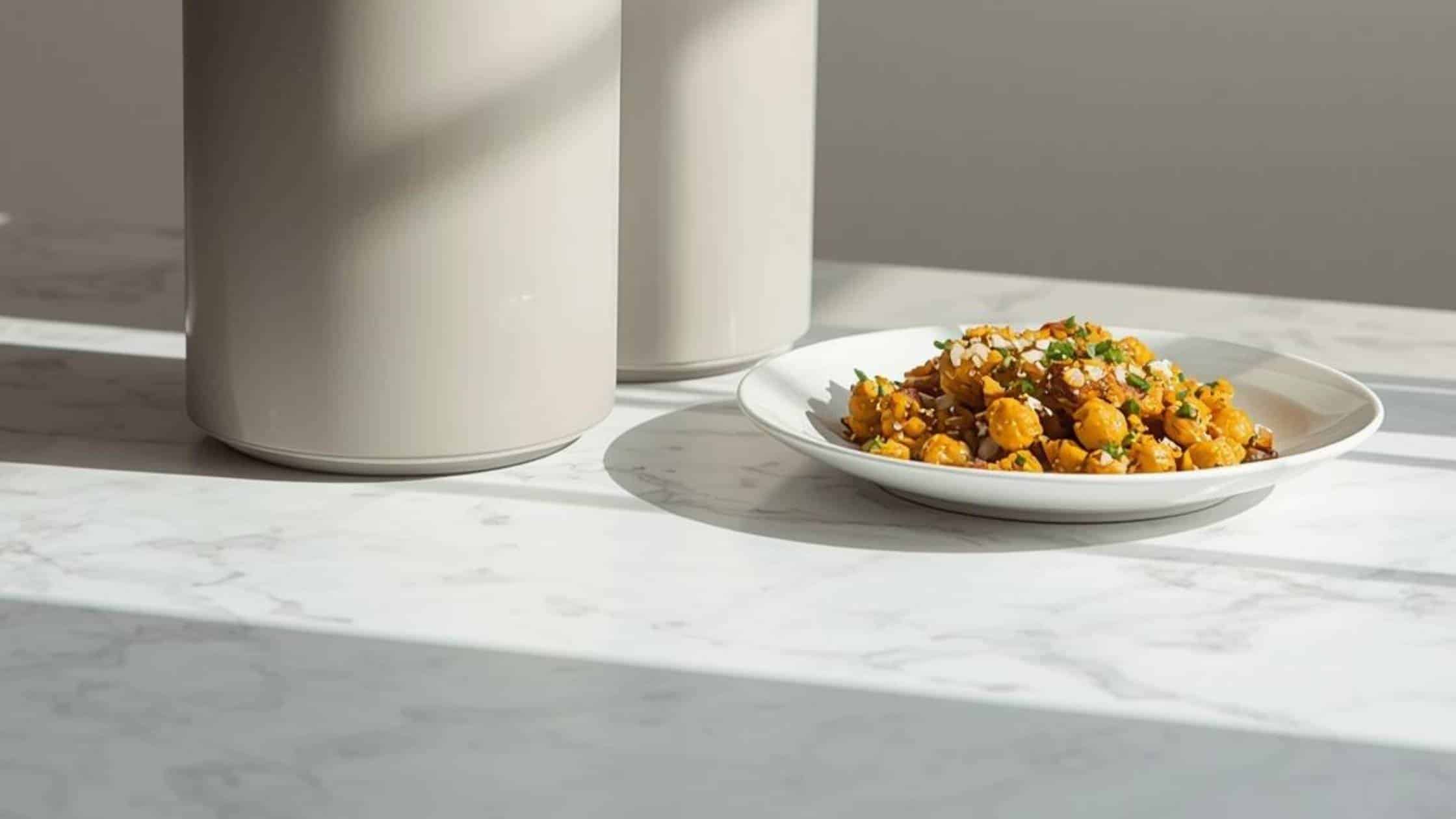
Engineered quartz countertops are the most consistently food-safe countertop choice for Orlando kitchens. The polymer resins used in quartz manufacturing fill all surface porosity, creating a surface that does not allow liquids or bacteria to penetrate below the cleaning zone. Soap and warm water removes pathogens effectively from a non-porous quartz surface, which is why quartz is the dominant choice in food-safety-conscious residential kitchen design.
Quartz requires no sealing to maintain its food-safe properties. Its non-porous character is inherent to the material, not dependent on a maintenance routine. The one practical note: consistent cutting board use prevents the micro-scratching that can create surface irregularities over time, even on a hard surface like quartz.
Granite: Food Safe With Consistent Sealing
Granite countertops are a natural stone with inherent porosity. When properly and regularly sealed, granite is considered food safe for everyday kitchen use. The penetrating sealer fills surface pores and prevents both liquid absorption and bacterial infiltration. The qualification is that maintenance must be kept up. Granite that has not been sealed on schedule can develop pore openings that are genuinely difficult to fully sanitize with surface cleaning alone.
For Orlando homeowners who stay current with their sealing routine, typically once per year for standard granite varieties, granite is a practical and beautiful food-safe kitchen surface. Clean with a pH-neutral product, keep up with the sealing schedule, and use cutting boards for raw proteins.
Quartzite: Natural Stone With Strong Hygiene Credentials
Quartzite countertops offer a natural stone option with lower inherent porosity than granite in many varieties, which means staining and bacterial infiltration risk is reduced compared to higher-porosity stones. True quartzite is also acid-resistant unlike marble, which means common acidic kitchen ingredients do not etch or damage the surface. For Orlando homeowners who want a natural stone surface with strong practical performance in a food-prep environment, quartzite is a compelling option.
Like granite, quartzite benefits from periodic sealing, though many quartzite varieties require less frequent resealing than standard granite due to their denser composition.
Marble: Beautiful but Higher Maintenance in a Kitchen
Marble countertops require more deliberate management in a kitchen context. Marble is porous and acid-sensitive, meaning lemon juice, tomatoes, vinegar, and many other common cooking ingredients will etch the surface and can cause staining in unsealed or under-sealed areas. Properly sealed marble is cleaner than unsealed marble, but maintaining the level of sealing that keeps marble fully food-safe in a high-use kitchen demands a committed maintenance routine.
Marble is a stunning material and a reasonable choice for homeowners who genuinely enjoy the maintenance relationship. For bathroom countertops where cooking acids are not a factor, marble performs better and requires less vigilance.
Other Surfaces Worth Knowing About
- Solid surface materials: non-porous and seamless by design, which eliminates the grout lines and seam gaps that harbor bacteria in other applications. Can be sanded and renewed when scratched. A legitimate food-safe option with lower scratch and heat resistance than stone.
- Tile with grout lines: the grout is porous and stains readily near food prep areas. Difficult to keep fully sanitary in a kitchen and not a recommended choice for primary countertop surfaces.
- Laminate: not porous but the seams and edges can harbor moisture and bacteria over time. Better suited to secondary surfaces than primary food prep areas.
Frequently Asked Questions
Is quartz food safe in 2026?
Yes. Engineered quartz’s non-porous composition makes it one of the most reliably food-safe countertop surfaces available in 2026. Its resistance to bacterial infiltration does not depend on any sealing routine, it cleans effectively with basic soap and water, and it does not release harmful compounds into food. The practical recommendation to use cutting boards for raw protein preparation applies to quartz as it does to any surface.
Does Florida’s humidity affect the food safety of granite countertops?
Ambient humidity does not affect a properly sealed granite surface in a meaningful way. The concern is specifically for granite where the sealer has thinned or where high-moisture zones near the sink or outdoor kitchen have seen more wear than the rest of the counter. In Orlando’s humid climate, running the water drop test in those zones twice per year keeps you ahead of any gaps in sealer coverage.
What is the most practical food-safe countertop for a busy Orlando family kitchen?
Engineered quartz is the most straightforward recommendation for high-use family kitchens in Orlando. It requires no sealing to maintain its food-safe properties, resists bacteria and staining at the surface level by design, and holds up to the volume of daily use that a busy household generates.
Explore Food-Safe Countertop Options at Art Stone Surfaces in Orlando
Our team can walk you through the practical food safety and performance differences between quartz, granite, quartzite, and other surface options. Find us on Google Maps or visit the Art Stone Surfaces showroom in Orlando to see materials in person and discuss what fits your kitchen best.