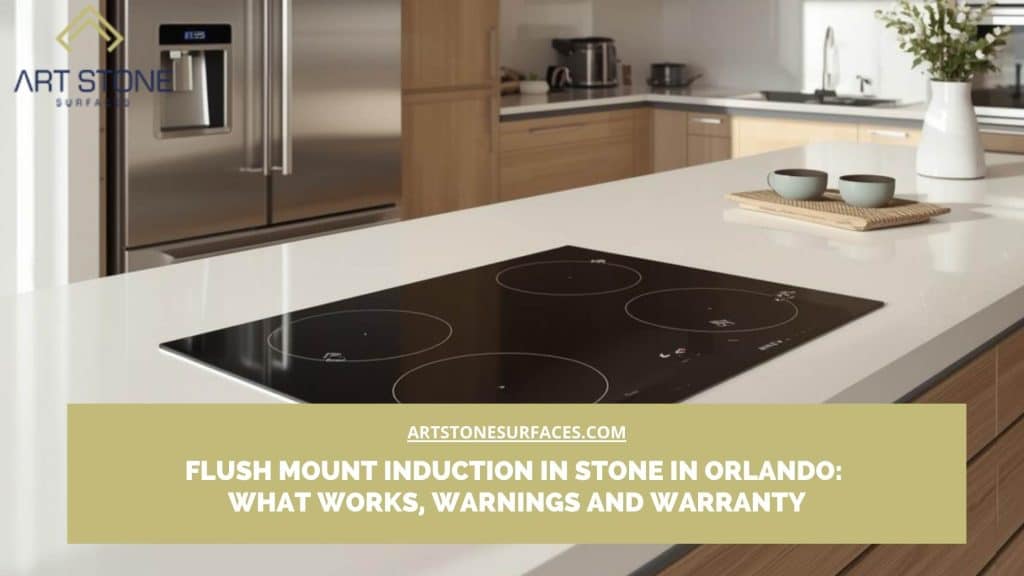
Flush mount induction cooktops are one of the most requested design details in Orlando kitchen renovations right now. The concept is simple and visually compelling. Instead of a visible appliance frame sitting in a cutout surrounded by stone, the cooktop glass sits at the exact same level as the countertop surface. The result is a seamless, contemporary look that makes the kitchen feel more expansive and easier to clean. Getting there in stone requires precise fabrication, careful planning, and a clear understanding of what the installation involves. At Art Stone Surfaces, we work through these details on every flush mount project so the outcome matches what homeowners envision.
The Difference Between Standard and Flush Mount Installation
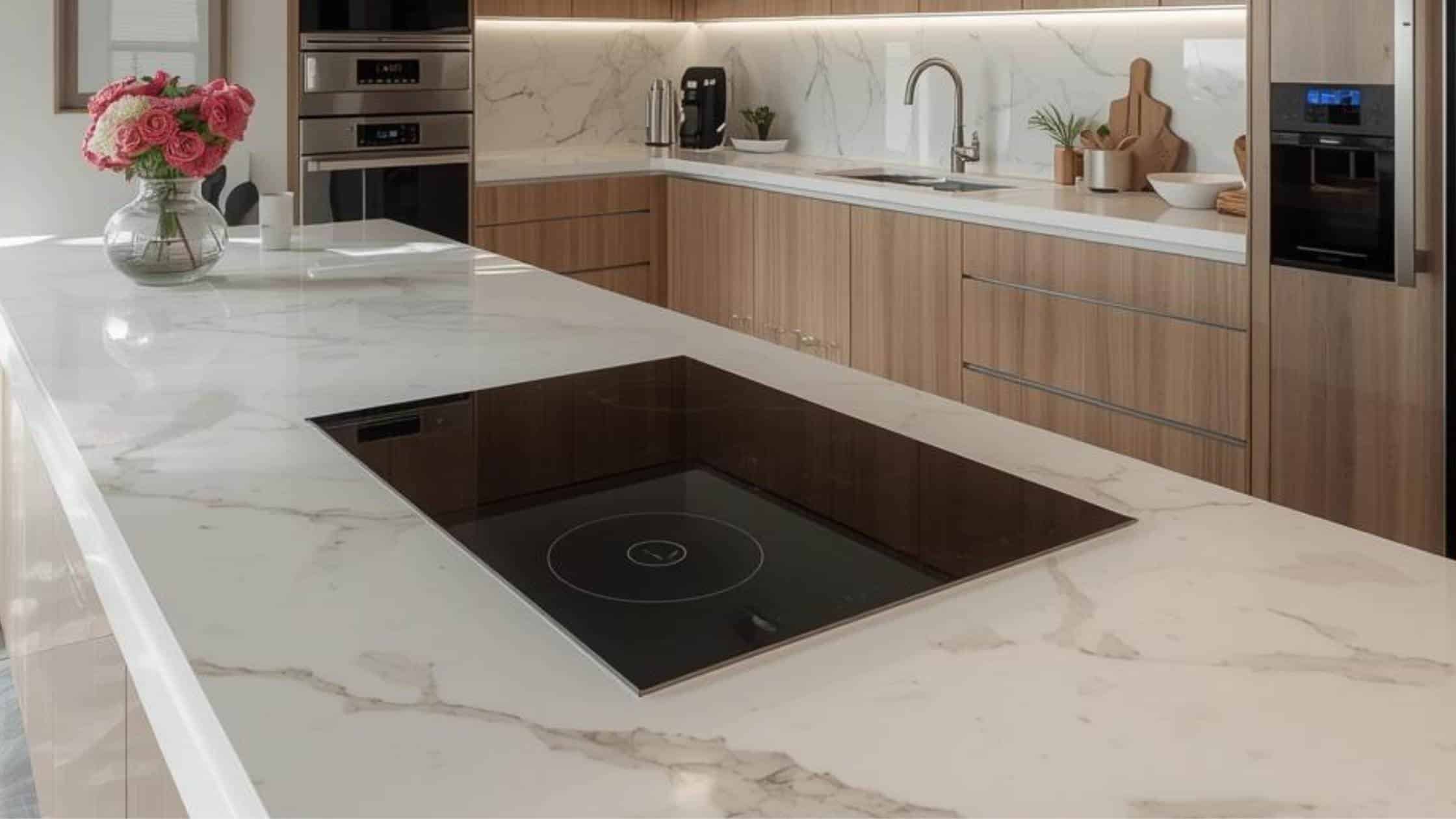
A standard drop-in cooktop installation creates a visible transition between the appliance frame and the surrounding countertop. The appliance sits in a cutout and a lip or frame rests on the stone surface. A flush mount eliminates that transition. The stone is cut to a specific depth so the cooktop glass ends up precisely level with the surrounding surface.
Achieving this requires fabrication tolerances that are tighter than a standard cutout. The depth of the cutout, the dimensional clearances on all sides, and the support structure beneath the appliance all need to be precisely coordinated. Small errors create big problems, from a cracked slab to an appliance that cannot seat properly.
Stone Surfaces That Work Well for Flush Mount Induction
The material choice matters significantly for flush mount induction projects. Here is how the most common Orlando kitchen countertop materials compare:
- Granite: excellent candidate for flush mount induction. Dense, thermally stable, and accepts precise cutouts without edge fracture risk when fabricated correctly.
- Quartzite: performs similarly to granite. Good thermal stability and dimensional consistency make it a reliable choice for precision cutout work.
- Engineered quartz: viable for most flush mount applications when the installation follows the manufacturer’s clearance and ventilation specifications. Some quartz brands have specific requirements about minimum distance between the cooktop and the stone edge.
- Sintered stone: technically the highest heat tolerance of any countertop material, but its hardness makes it brittle during fabrication. The router work required for a flush mount cutout demands highly experienced technique.
- Marble: not recommended for flush mount induction. The combination of thermal sensitivity and brittleness during fabrication creates too much risk.
For the majority of Orlando flush mount projects, granite, quartzite, and engineered quartz are the most practical choices, balancing fabrication reliability with design flexibility.
Fabrication Details That Determine Success or Failure
Our team pays attention to several specific factors on every flush mount induction installation:
- Cutout precision: the opening must match the appliance rough opening specification exactly. Too tight creates thermal expansion stress. Too loose creates instability and visible gaps.
- Slab thickness: most cooktop manufacturers specify minimum countertop thickness requirements for flush mount installations. Slabs thinner than 3 centimeters may not meet those specifications depending on the appliance.
- Edge clearances: minimum distances between the cooktop cutout and any adjacent sink opening, stone edge, or seam must be maintained. Insufficient clearance concentrates stress and increases crack risk significantly.
- Substrate support: the cabinet structure beneath the cooktop area must provide complete support. Unsupported spans near a cutout allow flexing under load, which can fracture the stone over time.
Warranty Issues to Understand Before Installation
This is where many homeowners are caught off guard and where pre-installation planning pays off.
Appliance manufacturers often specify ventilation clearances between the cooktop underside and the surrounding cabinet or stone structure. Installing too flush can restrict the airflow the appliance needs and void the cooktop warranty if the unit overheats or fails.
Stone manufacturers, particularly for engineered quartz, may not cover cracks that develop adjacent to cooktop cutouts if the installation deviates from their published specifications. Reviewing both the appliance installation guide and the stone manufacturer’s guidelines before cutting is a step we do not skip on any flush mount project.
Frequently Asked Questions
Can the cooktop and surrounding stone be perfectly level with zero visible gap?
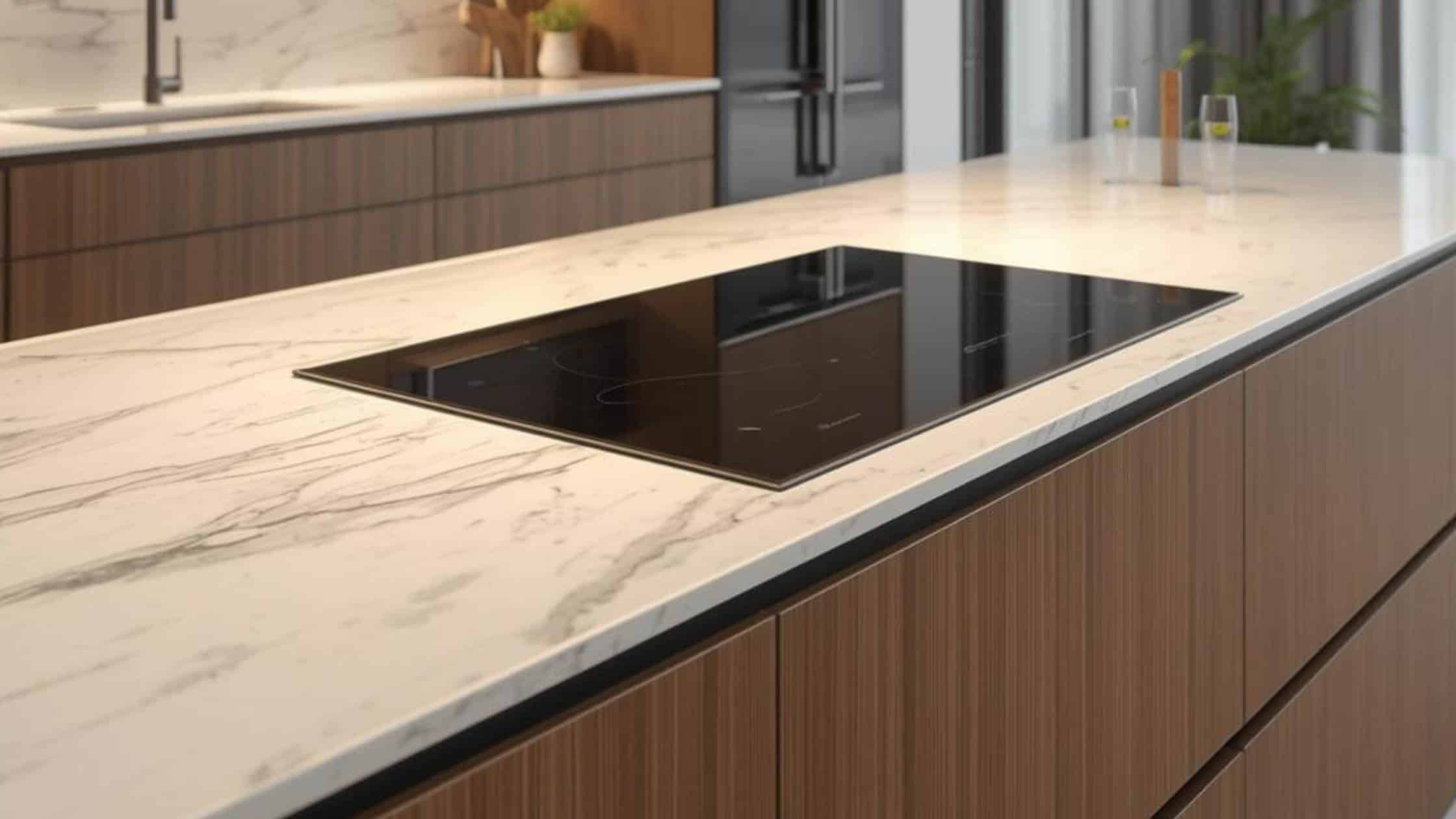
Some induction manufacturers allow a fully flush installation with no visible gap. Others require a small expansion clearance or slight recess between the cooktop surface and the surrounding stone to manage thermal expansion and ensure adequate ventilation. We review the specifications for your specific appliance model before any cutting begins.
Is flush mount induction fabrication significantly more expensive than a standard installation?
The additional cost is real and reflects the tighter tolerances, extra time, and care required compared to a standard drop-in cutout. It is the cost of doing the detail correctly. The exact premium varies by project scope and material.
My induction cooktop manual shows a standard drop-in installation only. Can I still go flush?
If the manufacturer specifies drop-in installation, we recommend following that specification. Installing flush on an appliance not rated for it can void the cooktop warranty and the stone warranty. Our team works within manufacturer specifications on every project.
Discuss Your Orlando Flush Mount Project with Art Stone Surfaces
A properly executed flush mount induction installation in stone looks exceptional and performs reliably for years. The Art Stone Surfaces team in Orlando has the fabrication experience to do this correctly from the first cut. Find us on Google Maps or visit our showroom with your appliance model details and we will walk through the full project plan with you.